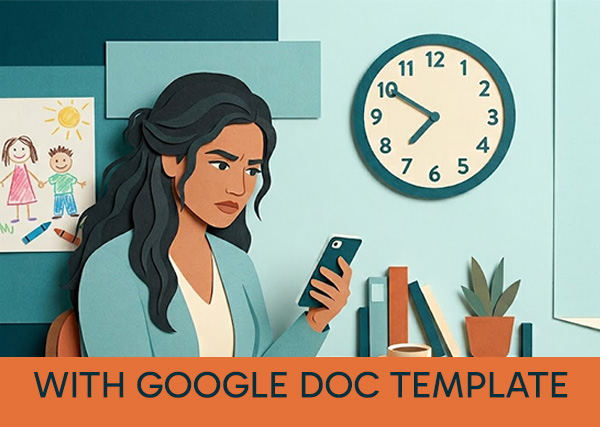

There are at least four conversations on your to-do list that you haven't had yet.
The teacher who's been impatient with parents. The assistant director who took your last comment the wrong way. The long-time staff member who has suddenly been showing up late to their shift. The new hire who keeps doing the thing you've already corrected twice.
You know each one is sitting there. You're not avoiding them because you don't know what to say. You're avoiding them because you haven't decided what they are.
Most hard conversations don't have to be the meeting you're dreading
Directors tend to default to one of two options with uncomfortable conversations. Postpone them entirely, or escalate the first one they finally have into a sit-down meeting with a closed door and a documented agenda.
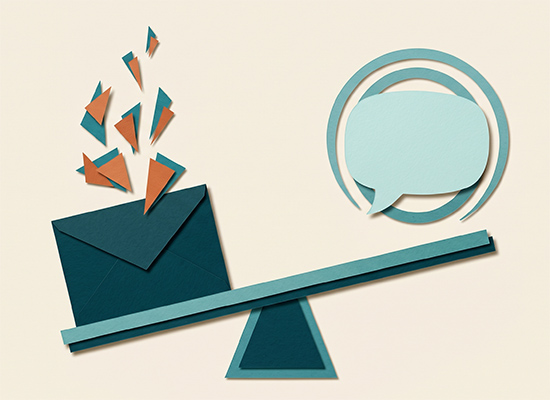
Almost nobody defaults to the third option — the one that makes the other two unnecessary. That third option is the brief, clear, in-the-moment conversation that takes a few minutes and prevents the formal version from ever being necessary. Most directors skip it entirely, and by the time they don't, the situation has drifted long enough that "informal" is no longer available.
Whichever conversation you end up in — the in-the-moment conversation or the formal write-up — the same four decisions determine how it goes. Not "what will I say if she cries" (though that matters too), but four specific decisions to make before you walk in.
1. What kind of conversation this actually is
This is the decision most directors skip — and the one that determines everything else.
Hard conversations split into three categories, and they need different prep:
Short, in the moment, often within hours. Under five minutes — not a meeting. “Hey — I noticed how drop-off went with the Garcia family. Can we talk about it for two minutes before nap?”
You're not correcting — you're at a fork. A role change, an extended plan, or a graceful exit. The energy is different — less “here's what needs to change,” more “is this still the right fit?”
Performance is below standard, documentation matters, and you need a Plan with a follow-up date. This is where our M.A.P. framework for hard conversation lives. You'll find that article in the resource hub.
Walking into a feedback moment with formal-correction energy burns goodwill and makes the next one harder to start. Walking into a decision conversation with coaching energy gets you six more meetings and no change. Naming the category first means everything that follows fits.
2. The outcome you actually want
Once you know what kind of conversation this is, the next decision is what outcome you're actually chasing. Most directors default to a reaction — and don't realize the difference until the conversation ends without anything changing.
Not "I want her to know I'm upset." Not "I want her to apologize."
Those are reactions, not outcomes.
The outcome is what needs to be true when the conversation ends. Becky understands that being impatient with parents isn't sustainable, and we have a specific plan to fix it. Or: Becky understands we're at a decision point, and she's leaving with clarity about what happens next.
If you can't write the outcome down in one sentence, you're not ready.
The conversation will drift toward whatever the other person wants to talk about — usually their feelings, their context, their reasons. You can hear all of that and still come back to the outcome. But you can't come back to something you never named.
3. What you'll do when they push back
Not if. When.
They'll cry, get defensive, blame someone else, agree too quickly, or change the subject to something legitimately worth discussing but unrelated. All of these are normal. None of them mean you're wrong.
The decision to make in advance is whether any of those responses will move you off your position.
You can be warm and steady at the same time. You can let someone have their reaction and still come back to the outcome. But that only works if you've decided beforehand that you will.
4. What it costs if you don't have the conversation
This isn't a motivation question. It's a calibration question.
Some conversations genuinely don't need to happen. The cost of letting it slide is low, the relationship is otherwise strong, and addressing the issue would do more damage than the issue itself.
But most of the conversations directors postpone aren't in that bucket. They're the ones where letting it slide costs the team's trust in your leadership, costs a parent who notices the inconsistency, and costs the staff member themselves the chance to actually improve.
Name the cost. Write it down if you have to. The cost is what carries you steady through the moment in the room when you want to wrap it up early and move on.
After the prep, the conversation is mostly delivery
These four decisions — category, outcome, response plan, cost of inaction — are the real prep. The script you write afterward is the easy part.
The reason hard conversations feel hard usually isn't that the words are difficult. It's that you walked in without deciding what you actually wanted, what kind of conversation it was, or what you'd do when it got uncomfortable — so the room decided for you.
Worth Remembering
- The conversation you're dreading is usually a five-minute feedback moment you skipped six weeks ago — not the formal meeting it's now becoming.
- Write the outcome in one sentence before you start, or the room will drift toward whatever the other person wants to talk about.
- Feedback moment, formal correction, decision conversation — name the category first, because each one needs a completely different energy in the room.
- Decide in advance whether tears, defensiveness, or "yes but" will move you off your position — otherwise you've drafted a wish, not a decision.
- Name the cost of inaction out loud, because that's what carries you steady through the moment you want to wrap up early and move on.
Reflection Questions
- What feedback moments did you skip this month that are quietly turning into formal corrections?
- Which of the four decisions — category, outcome, pushback plan, cost of inaction — do you skip most often when you walk into a hard conversation?
- If you had one of these postponed conversations in the next 48 hours, which one would move the most for your program?
What's New
Stay current on our most recently published articles.