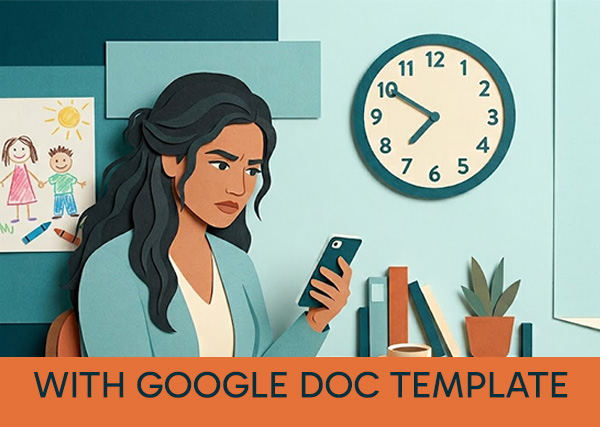

It's 7:48 AM. Their shift starts at 8. Your phone buzzes.
That's the whole text.
You read it twice. You take a breath. You start texting other staff to cover. And somewhere in the back of your mind, the same thought every director eventually has:
She doesn't. And that's the most useful thing you can know about her.
The Blind Spot Most Director Tactics Are Built On
When directors talk about the staff who frustrate them — the no-call no-shows, the defensive ones, the ones who can't take feedback, the ones who text instead of asking — they usually describe it as a character problem. Bad attitude. Entitled. Doesn't take it seriously.
Sometimes that's true. Usually it isn't.
Most of the staff in your building have never had a real job before. Not "haven't worked in childcare before" — haven't had a job. No previous boss to compare you to. No prior workplace where they learned about expectations.
This is where most director tactics quietly fail. They're built for people who already know what it means to be employed. They assume your staff knows that a 7:48 AM text isn't acceptable, that "I'll think about it" isn't a yes, that defensiveness during feedback reads as disrespect even when they don't mean it that way. Your staff doesn't know any of that. Not because they're bad people — because no one ever taught them.
The Reframe: Workplace Norms Are Curriculum
What changes when you internalize this? Your job is not just to lead a team. Your job is to teach a group of people what it means to be part of a team in the first place.
That's not extra work. That is the work.
The director who shows up frustrated that her staff doesn't already know things they were never taught is a director burning energy on the wrong problem. The director who treats workplace norms as something she actively teaches — the same way she teaches a new teacher how to do a diaper change or run circle time — gets her energy back.
Same staff. Different lens. Different result.
Five Shifts to Make
These are small. They cost you no money and not much time. They won't solve every staffing problem you have. They'll fix more of them than you'd expect.
One More Thing
You will still get the 7:48 AM text. You will still have the staff member who pushes back on feedback like it's personal. This framework doesn't make those moments disappear.
What it does is stop you from spending the rest of your day quietly furious that someone didn't know something they were never taught. You teach them. You name the norm. You move on.
Your team doesn't need you to be more frustrated. They need you to be the boss most of them have never had.
Worth Remembering
- The 7:48 AM no-call no-show isn't usually a character problem — it's a skill gap. Most childcare staff have never had a real boss to show them what professional behavior looks like.
- Workplace norms are curriculum. Treat them as something you actively teach — not something staff should already know — and you get your energy back.
- Make the implicit explicit. Write down what counts as enough notice, what professional dress means, how disagreements get raised. Walk every new hire through it.
- When a norm gets missed, coach the concept behind the correction. Don't just name the behavior — explain the why behind it.
- Pair every new hire intentionally with the staff member whose example you'd most want to multiply. They're your unpaid workplace-norms teachers. Name that out loud.
Reflection Questions
- If I wrote down "what being employed at my center looks like in practice," how much of it would be new information to my newest hire?
- The last time I corrected a staff member, did I explain the concept behind the correction — or just the behavior?
- Who in my building is already modeling what I'd want every new hire's first 30 days to look like? Have I told them that's their job?
Digital Download: What Being Employed Here Looks Like in Practice
The fill-in companion to this article. Most directors have an employee handbook. What they don't have is a document that describes how their center actually operates day-to-day — what professional behavior looks like, how feedback is given here, what counts as enough notice, how the team handles disagreement. This template is that. Customize it to your center, hand it to every new hire on day one, and pull it back out the next time a norm gets missed.
What's New
Stay current on our most recently published articles.