

Lesson 7: People Over Tasks

Leadership isn't about managing tasks. It's about serving people.
Your people are your culture, your brand, and the heartbeat of your program. They're the ones who bring your values to life every day. You can have the best curriculum in town, but if your team feels unseen or stretched thin, they won't be able to bring their best to the classroom.
At the foundation of every strong center are people: safe children, respected staff, motivated teachers, and supported families. When people come first, everything else follows.
The balance between people and tasks

Programs can't run on people-focus alone. When those tasks slip, even the strongest culture suffers.
But the opposite is also true. When leaders get buried in tasks, culture erodes just as fast. Staff begin to feel invisible. Parents feel overlooked. Connection gets replaced by checklists.
Warning signs you're becoming too task-driven
The last lesson was about being absent. This one is about the quieter trap — being fully present but buried, heads-down in the work while the people move around you. The tells:
Strategies to put people first
So how do you keep tasks in their place? A few shifts:


A real-world example
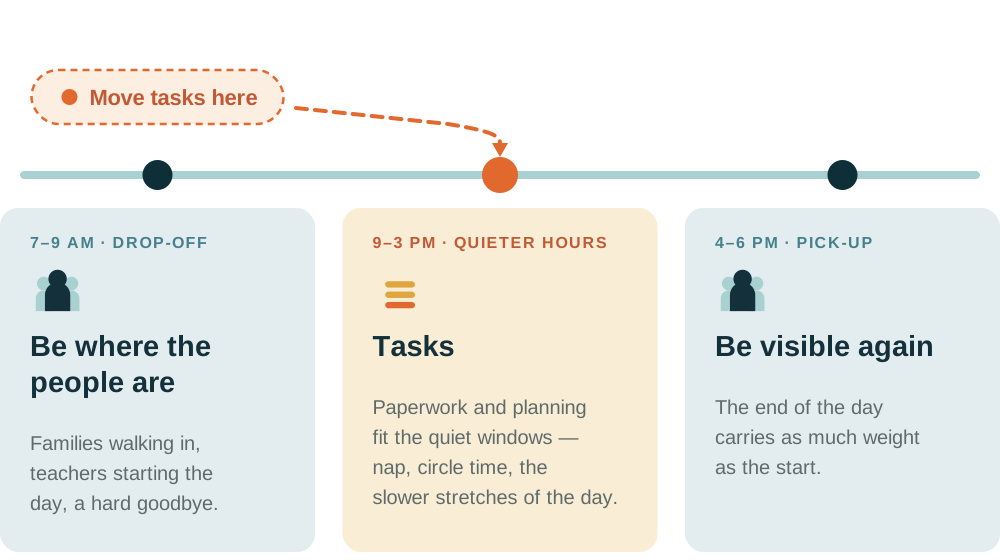
A director I coached was drowning in administrative work — budget reports, compliance logs, email. Staff described her as "unavailable." Parents felt overlooked. Morale slipped. Together, we restructured her week. She delegated reports to her assistant and carved out daily classroom time. She also got intentional about when she handled tasks: mornings after drop-off and quiet classroom periods became her paperwork windows. The rest of the day, she made herself visible — greeting parents, answering staff questions, spending time with children. Within a month, staff described her as more approachable, parent feedback improved, and turnover stabilized. The paperwork still got done — but people felt prioritized.
Reflection
Think back over the past week. Did your team experience your presence — or mostly your decisions? If one shift could move your time from tasks toward people, what would it be?
Turn to Lesson 7 in your workbook to choose one small habit that puts people first this week.