

Lesson 8: The Circle of Competence

One of the biggest traps in leadership is the pressure to have all the answers. That pressure often pushes new leaders into a risky space — not what they don't know, but what they think they know. It's not ignorance that causes most leadership mistakes. It's assumed competence.
This is where the Circle of Competence becomes one of the most valuable tools you have.
The three circles every leader navigates
The concept was popularized by investor Warren Buffett, and it's a powerful way to see where your knowledge is solid — and where risk lives. Picture three zones:
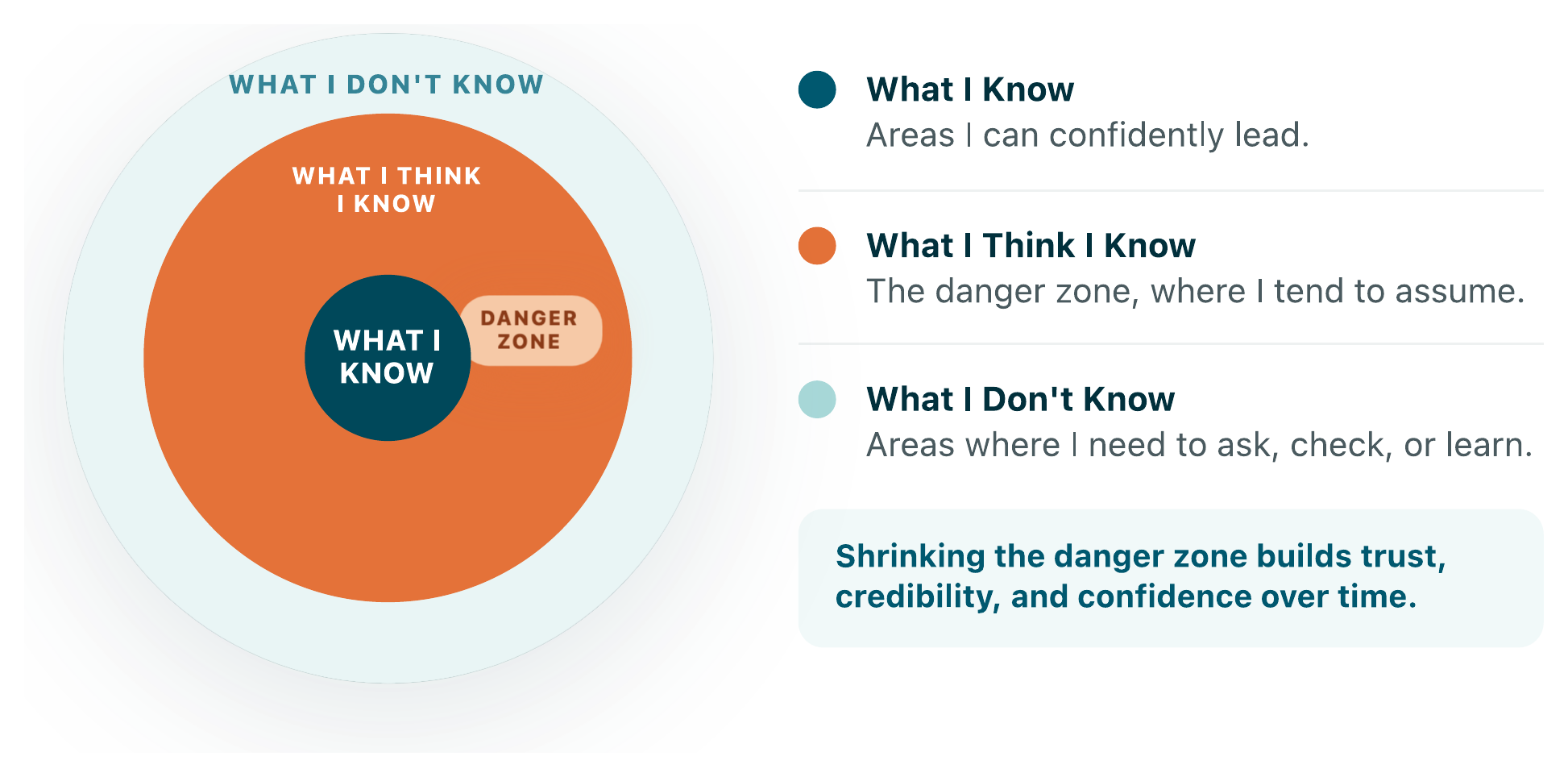
- What you know — your strength zone. The skills, knowledge, and situations you can confidently handle from experience, training, or clear policy. Your stance: confidence. You know how to run a fire drill or respond to a biting incident because you've done it before.
- What you think you know — the Danger Zone. Where most leadership mistakes happen. Here we assume we know the answer, skip the questions, and act too quickly — often out of pressure or fear of looking unsure. Your stance: risk. Guessing how to handle a custody pick-up dispute without reviewing the court order or policy.
- What you don't know — not weakness, but wisdom. Acknowledging what you don't know and choosing to ask, check, or learn protects you, your team, and your program. Your stance: wisdom. Saying, "I'm not sure, but I'll find out and follow up," when asked about subsidy rules.
Strong leadership isn't about staying in the first circle. It's about staying out of the second one.
You don't need to know everything to lead well
Many leaders feel pressure to have all the answers — especially when imposter syndrome shows up. That pressure leads to overcompensating, guessing, or pretending.


Avoiding and Shrinking the Danger Zone
Early in leadership, your what you know circle is often small — and your what you think you know circle looms large. That's normal. The risk shows up when the fear of looking inexperienced keeps you from slowing down. The way forward is simple: shrink the Danger Zone by growing what you actually know. Here's how.
Reflection
Where are you spending most of your time right now — what you know, what you think you know, or what you don't know? What's one habit you could practice this week to shrink your Danger Zone?
Pausing for clarity isn't weakness. It's leadership.
Turn to Lesson 8 in your workbook to identify where you operate most and choose one clarity habit.